
Goalvest 2026 Market Outlook (Fiscal Policy)
12/2/2025
As we approach the end of 2025, many Wall Street banks have published their year end targets for 2026, which range from 6,600 to 8,000 with a median of about 7,500. We are updating our views on 2026 through the lens of the political cycle and fiscal policy, monetary policy and the macro environment, AI investment, and the broader sector outlook. In this email, we are focusing on the political cycle and fiscal policy as Part 1 of our 2026 outlook.
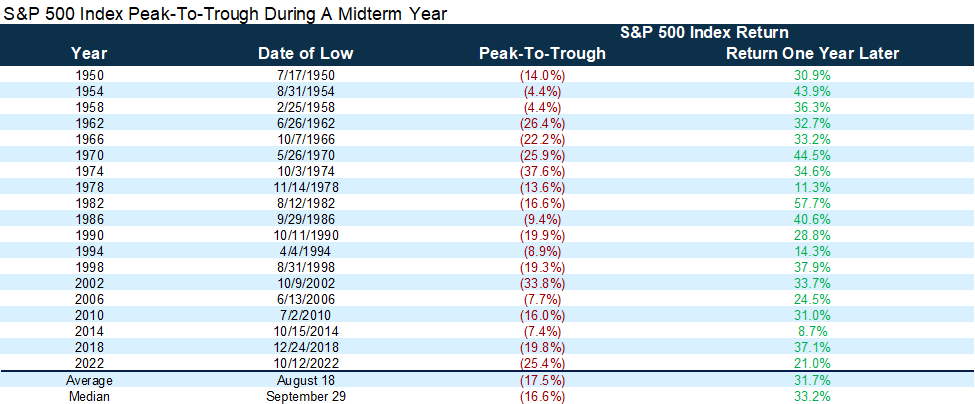
First, politics will matter. As 2026 is a midterm year, markets have historically been more volatile as investors position defensively amid election driven policy uncertainty and the possibility of a split Congress. The market has also just recovered from the historically long government shutdown, though the issue is expected to resurface in January 2026 given ongoing disagreements. As a result, the first half of the year will likely see politics driven volatility. That said, markets have generally delivered higher average returns under a split Congress, reflecting balanced checks and a reduced risk of extreme policy swings. Returns also tend to accelerate after the midterm elections once the policy outlook becomes clearer and the uncertainty premium fades.
Second, fiscal stimulus from the Big Beautiful Bill will begin to take effect. The CBO estimates that the bill will boost GDP growth in 2026 by about 0.9%. In Apollo’s view, the most significant catalyst is that beginning January 1, 2026, businesses can immediately deduct capital expenses including equipment purchases, R & D investment, software, and certain automation upgrades, providing a strong tailwind for tech investment. Additional pro-growth policies are also expected in strategically important sectors, particularly high tech.
Third, restrictive immigration policies will continue to shape parts of the labor market, especially in lower skill and temporary sectors such as construction. According to the Minneapolis Fed, the decline in net immigration explains about half of the recent slowdown in U.S. job growth, with the remainder driven by softer labor demand. This suggests that immigration constraints matter, but broader economic demand will remain a key driver of labor market conditions in 2026.
Last, the inflation impact of tariffs may fade in the second half of 2026. While the U.S. China trade truce is expected to continue, the broader shift in global supply chains will persist. The Supreme Court is set to rule in January 2026 on the legality of current tariffs. Goldman Sachs suggests the court may block them, but the administration is likely to re-impose most duties through other legal means. As a result, overall tariff levels should remain largely unchanged, though a legal ruling could trigger temporary market volatility.
Taken together, the political cycle, targeted fiscal support, labor supply dynamics, and tariff developments point to a 2026 environment that may be volatile in the first half but increasingly constructive as policy clarity improves and fiscal stimulus gains traction.
Sources: Carson Investment Research, Goldman Sachs, Ned Davis Research, Apollo, Minneapolis Fed
Disclaimer
GoalVest Advisory is a SEC registered investment adviser. Information presented is for educational purposes only intended for a broad audience. The information does not intend to make an offer or solicitation for the sale or purchase of any specific securities, investments, or investment strategies. Investments involve risk and are not guaranteed. GoalVest Advisory has reasonable belief that this marketing does not include any false or material misleading statements or omissions of facts regarding services, investment, or client experience. GoalVest Advisory has reasonable belief that the content as a whole will not cause an untrue or misleading implication regarding the adviser’s services, investments, or client experiences. Please refer to Form ADV Part 2A the adviser’s ADV Part 2A for material risks disclosures. Past performance of specific investment advice should not be relied upon without knowledge of certain circumstances of market events, nature and timing of the investments and relevant constraints of the investment. GoalVest Advisory has presented information in a fair and balanced manner. GoalVest Advisory is not giving tax, legal or accounting advice, consult a professional tax or legal representative if needed.